Wednesday, 20 March 2013

An Anatomy of Poetry: Explanations & Realisations


Just some thoughts on poetry I found that I thought I'd share (because I love it so...)  It's good to be reminded sometimes of what it really is. 

(If you want to read some really good poems, join me here: A Poem a Day where I indulge in posting a poem every day from some of the greatest poets out there.)


~Siobhán


'Everything one invents is true, you may be perfectly sure of that. Poetry is as precise as geometry.'
~Gustave Flaubert  


 'Pain is filtered in a poem so that it becomes finally, in the end, pleasure.'
~Mark Strand

'Poetry heals the wounds inflicted by reason.'
~Novalis  

'Poetry is when an emotion has found its thought and the thought has found words.'
~Robert Frost 


 'Poetry is plucking at the heartstrings, and making music with them.'  ~Dennis Gabor 

 'Science is for those who learn; poetry, for those who know.' ~ Joseph Roux


'A poet looks at the world the way a man looks at a woman.'  ~Wallace Stevens

'If I feel physically as if the top of my head were taken off, I know that is poetry.'~ Emily Dickinson


'Poetry is the journal of a sea animal living on land, wanting to fly in the air. Poetry is a search for syllables to shoot at the barriers of the unknown and the unknowable. Poetry is a phantom script telling how rainbows are made and why they go away.' ~ Carl Sandburg


'Publishing a volume of verse is like dropping a rose-petal down the Grand Canyon and waiting for the echo.'  ~Don Marquis

'Poetry is ordinary language raised to the Nth power. Poetry is boned with ideas, nerved and blooded with emotions, all held together by the delicate, tough skin of words.'
~Paul Engle


'Like butterflies in Spring
Poetry awakens the Spirit,
stirs the imagination and explores
the possibilities with each stroke of its rhythmic wings.'
~Jamie Lynn Morris


'Mathematics and Poetry are... the utterance of the same power of imagination, only that in the one case it is addressed to the head, in the other, to the heart.'  ~Thomas Hill

'Poetry is not an expression of the party line.  It's that time of night, lying in bed, thinking what you really think, making the private world public, that's what the poet does.'  ~Allen Ginsberg


'Poetry is the language in which man explores his own amazement.' ~Christopher Fry
 
'The poet is the man made to solve the riddle of the universe who brings the whole soul of man into activity.' ~ Samuel Taylor Coleridge  

'Poetry should strike the reader as a wording of his own highest thoughts, and appear almost a remembrance.' ~John Keats
(How to write poetry?) - 'Put your ear down close to your soul and listen hard.' - Anne Sexton


Tuesday, 12 March 2013

An Ode to On The Road


'There was nowhere to go but everywhere, so just keep on rolling under the stars' ~ 
Jack Kerouac, On the Road

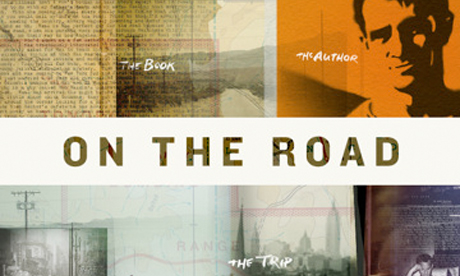
It's Jack Kerouac's birthday today and as such, I am penning an ode of sorts to him and his legendary novel, 'On the Road.'

I'm sure everyone's heard of Jack Kerouac. But not everyone it seems has heard of The Beats, the literary movement he was a part of.  The Beat Generation was the name given to the literary/cultural movement that arose in America in the 1950s, partly an underground and subculture movement, a reaction to the conservatism of the times. Based mainly in San Francisco, it celebrated non-conformity and spontaneous creative expression, which bred a whole new school of young bohemian-like writers, dabbling in both literary experimentation and drug use to achieve a new authentic and exciting form of art. 

It was pretty far-out to put it simply. The movement was a rebellious one, attacking social conventions, materialism and traditionalist literary structures. The most famous Beats works of the time were Allen Ginsberg's prose poem 'Howl', a rebuke to bourgeois society and the havoc it was wrecking on its young: 'I saw the best minds  of my generation destroyed by madness, starving hysterical naked...' (you can hear Ginsberg read it here) and Jack Kerouac's ground-breaking road-trip novel 'On the Road.Howl was revolutionary in tone and outlined the Beat manifesto, while Kerouac's novel was an experiment in prose that adhered to the creative expression of the movement: spontaneous, confessional, emotional, dramatic, transcendental. 

Why On the Road is still so loved today is no mystery. It's theme really is freedom - the freedom that comes with hitting the highway and seeing where it takes you, both literally and metaphorically. The journey or 'quest', which was so central to many American novels before (Huckleberry Finn most notably) was interpreted to new heights in Kerouac's novel. It chronicled a journey to one's inner self, to the blatant beauty that was at the core of the world, until a harmonious intermingling of the individual, the self, with the communal and the  world occured. 


It's earned a repuatation as being a 'cool' book, maybe the coolest book ever written. Why? Well it features sex, drink, drugs and youth letting loose, rebellious youth at that, liberated, passionate and high on life. It defined its new generation - a generation of young hipsters, dabbling in drink and drugs and go-getting as a way of transcending the humdrum of routine lives, individual free spirits searching for that elusive something that would give definition and meaning to life, the essence of life itself, the actual living of it and finding kindred spirits who felt the same, as the narrator realises early on: ''because the only people that interest me are the mad ones, the ones who are mad to live, mad to talk, desirous of everything at the same time, the ones that never yearn or saay a commonplace thing...but burn, burn, burn like roman candles across the night", an accurate description of  Kerouac and The Beats themselves. 

The novel details a quest for self: 'the road must eventually lead to the whole world' which Kerouac's friend John Clellon Holmes has commented upon, saying that the characters of the book were 'on a quest, and that the specific object of their quest was spiritual. Though they rushed back and forth across the country on the slightest pretext, gatehring kicks along the way, their real journey was inward; and if they seemed to trespass most boundaries, legal and moral, it was only in the hope of finding a belief on the other side.'


Going 'on the road' in the novel is to lose one's sense of self, to leave the self open to discovery on the wild plains of the country, but also to immerse the individual self with America, with what America was, at ground level, to absorb it into your being:  "I woke up as the sun was reddening; and that was the one distinct time in my life, the strangest moment of all, when I didn't know who I was - I was far away from home, haunted and tired with travel, in a cheap hotel room I'd never seen, hearing the hiss of steam outside, and the creak of the old wood of the hotel, and footsteps upstairs, and all the sad sounds, and I looked at the cracked high ceiling and really didn't know who I was for about fifteen strange seconds. I wasn't scared; I was just somebody else, some stranger, and my whole life was a haunted life, the life of a ghost.” Being on the road is about discovery, self-discovery, as well as the revelatory discovery of the world.

What is so remarkable about the novel is not even its theme, but its style of writing. On the Road is written  in 'spontaneous prose' - so spontaneous that Kerouac wrote it almost all in one go, on one piece of unbroken typescript (which can be viewed in a museum today - right.) The writing was what Kerouac himself termed 'kickwriting' (and what could rightly describe the rest of the Beats' work) - 'write only what kicks you and what keeps you overtime awake from sheer mad joy.'  He said of his style in On the Road - 'Wild form's the only form holds what I have to say - my mind is exploding to say something about every image and every memory...I have an irrational lust to set down everything I know.' This became Kerouac's signature style (of which you can read more in his rules for writing below).


This free-association style is what gives the book its unique energy, verve and coolness. The Beats style in general was heavily influenced very much from the burgeoning jazz scene at the time, with their free-flowing and improvisational wordplay and sense of rhythm and lyricism. Kerouac's prose reads like an energetic fuelled stream-of-consciousness, a hallucinatory monologue in some parts, a spiritual manifesto in others, but always, in a language that is as frenetic as its subject-matter, as honest and confessional as its narrator and as vivid and energetic as what it is expressing. Here's an example of an epiphany moment described in language that is breathless and euphoric, rhythmic and spontaneous:


"And for just a moment I had reached the point of ecstasy that I always wanted to reach, which was the complete step across chronological time into timeless shadows, and wonderment in the bleakness of the mortal realm, and the sensation of death kicking at my heels to move on, with a phantom dogging its own heels, and myself hurrying to a plank where all the angels dove off and flew into the holy void of uncreated emptiness, the potent and inconceivable radiancies shining in bright Mind Essence, innumerable lotuslands falling open in the magic mothswarm of heaven. 
I could hear an indescribable seething roar which wasn't in my ear but everywhere and had nothing to do with sounds. I realized that I had died and been reborn numberless times but just didn't remember especially because the transitions from life to death and back to life are so ghostly easy, a magical action for naught, like falling asleep and waking up again a million times, the utter casualness and deep ignorance of it. I realized it was only because of the stability of the intrinsic Mind that these ripples of birth and death took place, like the action of the wind on a sheet of pure, serene, mirror-like water. I felt sweet, swinging bliss, like a big shot of heroin in the mainline vein; like a gulp of wine late in the afternoon and it makes you shudder; my feet tingled. I thought I was going to die the very next moment. But I didn't die...” 

Some think of On the Road as semi-autiobiographical, but it wasn't. The characters are fictional, a reflection of Kerouac's own feelings more than people - Sal Paradise is his main self and Dean Moriarty, his more rash alter-ego, the liberated passionate self he would like to be.  In the inroduction to the Penguin Classics edition, Ann Charters notes that what Henry James once said about Harriet Beecher Stowe's novel 'Uncle Tom's Cabin', could also be applied to On the Road: that the novel was 'much less a book than a state of vision, a feeling of consciousness'. Which perhaps explains its supreme place in the canon of literature as well as in people's minds and hearts. It has feeling, rather than plot; vision rather than theme; is an arresting amalgamation of heart, gut and mind.

I love On the Road for all these reasons. There is an energy and vibrancy and 'vibe' in its prose that can't be equalled in any other novels.  And it's just brimming over with a sense of urgency and freedom and lust for life! Real and raw and ready: a few free-spirits, hitting the road, seeking, searching, not knowing what life is, what life they want, except to feel things, to experience things, to  live it up while they can, to feel freedom as the wind blowing on their faces, the engine revving, en route to destinations unknown, or the stars hanging above them at night, an invitation, a lullaby, a blessing. It buzzes along, brims, sings, shouts and stings, brazen and wild, reflective, exhilarating and mystical. Novels are supposed to offer a view into life, but this one offers more than that - not just a view, but a visceral immersing in it.  Reading it is like an adrenaline shot to the soul.  

Basically, if you haven't yet read On the Road - read it! See (and more so - feel) why it has become such a classic. Below are Jack Kerouac's pretty-out-there rules for writing, from Belief and Technique for Modern Prose which outlines his own core concepts on the writing process.  These are maybe the best rules ever written on writing, most definitely the most exciting and expressive anyway. I especially like #28  - 'the crazier the better'! Yeah, now we're talking. 

Thanks Jack ;)


~ Siobhán
 

  1. Scribbled secret notebooks, and wild typewritten pages, for yr own joy
  2. Submissive to everything, open, listening
  3. Try never get drunk outside yr own house
  4. Be in love with yr life
  5. Something that you feel will find its own form
  6. Be crazy dumbsaint of the mind
  7. Blow as deep as you want to blow
  8. Write what you want bottomless from bottom of the mind
  9. The unspeakable visions of the individual
  10. No time for poetry but exactly what is
  11. Visionary tics shivering in the chest
  12. In tranced fixation dreaming upon object before you
  13. Remove literary, grammatical and syntactical inhibition
  14. Like Proust be an old teahead of time
  15. Telling the true story of the world in interior monolog
  16. The jewel center of interest is the eye within the eye
  17. Write in recollection and amazement for yourself
  18. Work from pithy middle eye out, swimming in language sea
  19. Accept loss forever
  20. Believe in the holy contour of life
  21. Struggle to sketch the flow that already exists intact in mind
  22. Don’t think of words when you stop but to see picture better
  23. Keep track of every day the date emblazoned in yr morning
  24. No fear or shame in the dignity of yr experience, language & knowledge
  25. Write for the world to read and see yr exact pictures of it
  26. Bookmovie is the movie in words, the visual American form
  27. In praise of Character in the Bleak inhuman Loneliness
  28. Composing wild, undisciplined, pure, coming in from under, crazier the better
  29. You’re a Genius all the time
  30. Writer-Director of Earthly movies Sponsored & Angeled in Heaven


Monday, 4 March 2013

The Occupational Hazards of Being a Writer...


So I was thinking about writing and writers and the 'writerly' self and all the many wholesome advantages it has bestowed on me, but also its shadowed side, the negative repurcussions of being a writer, the occupational hazards if you will. 

A writer's work has been defined as 'paying attention to the world' but sometimes paying attention to the world gets too much. Frankly, it can be dizzying at times. Trying to take in everything sometimes feels like you'd need ten eyes and a central processing unit instead of a brain. And it gets exasperating when you can't take account of everything. It causes sleeplessness, hyper and heightened sensitivity and an inability to concentrate on any one thing at a time.


One of the major occupational hazards of being a writer is that you read into things, in a really overblown way. I studied literature for my college degree and a recurring side-effect of learning to critically analyse texts is that I read into absolutely everything written now. We were taught how to interpret texts intimately, how to decode and deconstruct every sentence, every word, to see what's really going on beneath, theme-wise and meaning-wise and the handy skill of reading between the lines. Now I can't help but employ this skill in every written word context:  text messages, online messages, letters, notes, greeting cards. I read so much into what people write - how they phrase things, what vocabulary they use, line-breaks, structure, punctuation - it all says so much, whether they're conscious of it or not. I dissect any written document like a forensic scientist, looking for clues of personality (of which there are many), and also other things like what is not being said and what really wants to be said! (Yep, it's THAT revealing!)

I read an article recently on something similar - forensic linguistics to be exact. Which basically is the term for analysis of language and the written word being used as evidence in law convictions (You can read more about it here: Solving Crimes with Linguistics) There have been cases which were decided on the linguistic evidence presented - analysis and comparison of notes and emails proved ample evidence to link the accused with the crime. See, the way you write is so specific and unique, it can be used as an effective individual identification. 

Another side-effect of this 'critical analysis syndrome' is you become particulary sensitive to grammar - more precisely - grammar mistakes. You morph into a Grammar Nazi, consistently on the watch for misuses of there, their and they're, too, two and to, your and you're, and worst of all, superfluous apostrophe use! I just can't stand it when I encounter bad grammar, especially in public places, like shop signs. Somehow I equate perfect grammar with a well-oiled, harmonious, functioning fluctuating universe; bad grammar just upsets the whole balance and throws everything off-kilter. 

As a writer, I love words. I am, head-over-heels in love with words. Therefore I am wordy at times. Vaingloriously verbose. And when it comes to arguments, believe you me, verbose is a trait that you don't want to have! We writers are also prone to over-writing anything written - from birthday cards to text messages, grocery lists, post-its, business letters, the comments section in questionnaires, and even, I've been held accountable - social network statuses. Anywhere the written word is concerned - domestically, functionary or mandatory - you can be assured a writer will leave their verbal fingerprint (we quite rightly rejoice in this I might add).


Curiousity is a trait specific to being a writer. Apparently, we are notoriously so. Look - there's even a book/writing manual on it! (right). But curiousity can get you into  a lot of trouble - just look at crime writers and journalists. Those more lay writers of us just get termed 'nosey' by other people, whom we are frequently observing at close quarters, almost with the same keeness and intense awe as those nature documentary makers that stalk out and film wild animals. (One of the first exercises you do in writing workshops is called 'The KGB exercise' - write up a close observation of people and place).


Another hazard for writers is routine interference. It's been proven that writers do their best work either early in the morning or late at night. I'm the latter. My default work setting is now late pm. Early mornings I'm afraid are out for me. Lots of late night writing binges have meant that my mind has been programmed to perform better in the wee small hours. It's only then it becomes alive brimming and fizzing over with ideas. The result of which can mean lots of wasted, unproductive days and  sleepless nights.

Procrastination is a serious occupational hazard of writing. Due to the nature of the writing process - random, weird, and generally undefinable - procrastination develops in and around writing bouts. It's a veiled fear in a way, inverted adrenaline, a sort of coping mechanism, but it is real nevertheless. It's also a perilous pitfall. Handicapping. Paralysing. And can succeed in killing your writing career if it's left to develop ceaselesly, like an aggressive fungus growth. 

Physical hazards in writing are limited but include: stiff limbs, poor circulation and backache (exercise deprivation as sitting at a desk to write usually requires staying at a desk, no breaks, no leg stretches ). Another is that I always end up with pen ink all over my clothes. Even though I can't seem to keep a pen with me to save my life, I still manage to have ink scrawls everywhere - jeans, hands, even face (an embarassing result of frenzied inspired scribbling.) Bitten nails are also a side-effect of the profession, as is eye-strain, with glasses a necessity for most writers at some stage. Not to mention a predisposition to drinking copious amounts of coffee and if we're of the Hemingway school of writers - hard liquor. 


I can't read books solely for pleasure anymore. I read them as a writer, actively not passively, poring over sentence constructions and dissecting well-chosen words. I read and re-read; I can't just read in a continuous manner, moving along at a fast pace, I keep stopping and starting, marvelling at the language, even noting some phrases down, so I'm a ponderously slow reader (my friend pointed this out to me circa 10 years old, when she noticed she'd have a whole chapter read in the time it took me to read two pages - I just couldn't move on until I'd absorbed everything they had to offer.)

Environmentally speaking, we writers, on average, waste a lot of paper. All those countless atrocious attempts and aimless doodles pages (not to mention dumped manuscripts) that are  scrunched up and thrown in the bin before we even begin the real writing. We go through not just a lot of paper, but a lot of ink. Even though most submissions nowadays are online, we do like extra hard copies of our work to be somewhere within reach just to remind ourselves that we have produced something substantial after all. 


Writing can turn you anti-social from time to time. Like it's hard to keep up a conversation while your mind keeps wandering to that half-written story in your head. You nod along vaguely but really, you've left your body. There has to be a name for this, this type of 'ghost' writing. You never stop being a writer, you don't leave the job behind at your desk - you are writing in your mind non-stop 24/7.

Another unfortunate consequence of being a writer is that you tend to make up things in real life as well as just on the page. Oh yep. This one can land you in a lot of trouble. Daily life becomes a sort of blank page awaiting your scribbles. You start to tell yourself stories from day-to-day happenings, everything becomes plot-driven and people take on the roles of stock characters. Also, you start to project characters onto real-life people. You turn real-life people into characters and sometimes, you start to believe the fictional version rather then the real one. You makes muses of people and start fictionalising them until they become myths, half-human, half-god (not good this, believe me I know #I'm a Poet


You're prone to fictionalising, full stop. You make things up, tell white lies, embellish - ah, yes that's the word - you're prone to embellishment: making things sound more exciting than they actually are. Boring subject-matter wouldn't cut it in a book and same in real life - so you harness your embellishing skills and set to embellishing - that is, adding an event here, a description there, a juicy bit of dialogue there until you yourself become the unreliable narrator of your own life. 

But the worst occupational hazard has to be the backlash you will invariably receive when published. Lawsuits are not uncommon. And we writers are generally an opinionated bunch, and as scribes of the written word, we tend to you know - write these opinions down - therefore immortalising them forever in hardcore evidence. Which can lead to a lot of disgruntlement on our audience's behalf. But hey, we live our lives on the parapet, writing is expression and expression is truth, and truth will always get you into some kind of trouble.

On the same note, writing can make you more outspoken. Writing, unlike speaking, insists that you put down only what is true (like a filter), and when you do it often enough, for long enough, happily enough, it kind of transposes into your speech medium too - until vóila -you start to speak the truth. And boy, do things get complicated then...


So you see, there's a lot of occupational hazards attached to writing. Here are just some. What about you? Are you afflicted with the same ones I am? Or do other  more grotesque ones haunt you dear writers? It's a dangerous game writing, but to give it up would be to live in a world of far worse afflictions. 

Take care now! 

~Siobhán

Monday, 25 February 2013

A Blue True Dream of Sky


 'I never get tired of the blue sky'  ~ Vincent Van Gogh

Finally, it's blue sky season! Is there anything more beautiful than the sight of a big blue sky I ask you? Especially after months of grey murky ones?!

I LOVE blue skies. Blue skies make everything better. Blue skies invoke smiles and grins and giddy fits of glee. Blue skies reveal hidden sights. Notice how everything looks so much better when the day is lit by the sky's blue hue and everywhere, everything shines and shimmers? Blue skies make days brighter and better and bigger. Blue skies are superlative!

I am always reminded of EE Cumming's poem, 'i thank you God' and the line -  'for a blue true dream of sky' when marvelling upon a blue sky. For it is true somehow. It is truth. This is how the world is supposed to be; this is how life should be; bright and cheery and big and vast and beautiful and ever-unfolding and beaming and bursting - this is the truth.

There are all kinds of beautiful blue in a blue sky: azure, cerulean, turquoise, powder blue, cobalt. (If you want to read on the glories of the colour blue, you can check out my previous post on all things blue here: Why So Blue?) It's the kind of blue that will keep you gawping at it for ages upon ages trying to define it - or - just appreciate it. It's a colour that's alive and breathing. A colour that never gets tired or dull or ordinary. A colour that is truly vivid.

Why do I like  blue skies? Because they're banners of good times. They're exultation, exclamation. They're the bastions of new beginnings.  They buoy the spirits. They are the ultimate mascot of  optimism, true blue. 'Excuse me while I kiss the sky' - and yes, Jimi Hendrix, they incite feelings of elation, sheer glad-to-be-aliveness, throw back your head and let your spirit soar kind of happiness. 

Yep, pretty spectacular.


Blue skies are celestial. 'And they were canopied by the blue sky,/So cloudless, clear, and purely beautiful,/That God alone was to be seen in Heaven.'  Lord Byron wasn't the only one who saw the heavenly connection in blue skies. Robert Frost did so in his poem 'Fragmentary Blue' where he likens our affinity for blue skies with what lies higher up, the big beyond.  'The sky is the daily bread of the eyes' - Ralph Waldo Emerson noted, the spiritual canvas that is available to all and with as easy an entry as a glance.

There is infinity hanging up there in the big blue, horizons unscaled and plentiful perspective, an accessible kind of transcending. Who doesn't, on occasion, tilt their head skywards and soar with daydreams and flyaway notions of all those castles we yearn to build up there?  The way ahead is much clearer on blue sky days than grey ones. Blueprints all around. 


To me, blue skies  feel exactly like this: In the sky/an infinitude of hope,/a canvas of glory/all possibilities mine. (Terri Guillemets) All possibilities mine. That's it! Blue skies represent possibilities. They are vast and limitless and tell of countless horizons. Maybe that's why we feel so good on a blue sky day?

Blue skies are for daydreamers -  'You can't put your feet on the ground until you've touched the sky,' says writer Paul Auster. Many's a daydream was built on a blue sky and its up, up and away influencing. It is the perfect backdrop for imaginings. But how do you touch the sky? 'Only from the heart can you touch the sky' Rumi maintained. And he was right, there is an element of dreams and belief so evident in contemplating the sky, that in business, there's even a word for it: blue-sky thinking - thinking outside of the box, pushing the boundaries to excel to greatness.


Oh, but how to put it exactly, this feeling of exuberance? 'If the sight of the blue skies fills you with joy, if a blade of grass springing up in the fields has power to move you, if the simple things in nature have a message you understand, Rejoice, for your soul is alive.' ~  Eleanora Duse.  Yes, that's it, a litmus test of being alive. 

And maybe why I find blue skies so cool is because really, they're part of our ordinary landscape that when you look closely at, you realise is truly extraordinary. Up beyond the sky into deep dark space and lo and behold, look back at the earth, this humble little planet of ours, with its banner of blue, glowing in the dark, so welcoming in the black surrounding universe, a miracle really - '...I think the real miracle is not to walk either on water or in
thin air, but to walk on earth. Every day we are engaged in a miracle which we don't even recognize: a blue sky, white clouds, green leaves, the black, curious eyes of a child - our own two eyes. All is a miracle.' (- Thich Nhat Hanh.) Blue skies, the casual reminder of that miracle, alerting us to the very fact of it.
 
Like Van Gogh, I never get tired of the blue sky either. It is infinitely more entrancing to me than sunsets - sunsets are gorgeous yes, but they announce the darkness, the dimming of the day, an ending. Blue skies are the complete opposite: they are the flags of dawn announcing the day and all the many possibilities it has in store for us. They are heralds of new horizons, harbingers of joy, reminders of what a big beautiful world we actually live in and just how involving it is. 

Now, what could beat that? 

Blue-sky beaming,

~ Siobhán

***

Soundtrack for watching skies by! -


Sunday, 17 February 2013

Sunday Morning Musing: Getting Happy


Yes, Stephen King knows exactly how to put it. Writing isn't about so many things; rather about one in general: enriching life - yours and others  and then, as an offshot, a consequence - getting happy, getting immensely immeasurably happy. 


~ Siobhán

Monday, 4 February 2013

Favourite Words #1: Melancholy


 'Melancholy is the pleasure of being sad.' - Victor Hugo

So I've come up with this idea for some new regular blog posts on some favourite words of mine (because I love what words can do). 

And the first word I'd like to muse on is: Melancholy

It's a word that often comes up in relation to poetry, poets, and the arts in general. And it's a word I love as much for its sound and its sight, as its meaning. 

 
Melancholy -  like a green vine coiling around the heart. Or a perfumed sadness. A beautiful kind of sorrow, like an intricate lace veil worn over the face while grieving, a deep forest-green pool of tears and an emerald halo of sighs. So many images that come to mind when I see the word... A black inkscape of tears, tears, so many tears, oval-shaped and drooping like sad but beautiful pearls.  

A dam of tears always on the verge of bursting. An eye, like an antenna, always open, and always feeling. (like The Cure's 'Wish' album artwork, left) And it sounds like tears too doesn't it? A collected deep reservoir of tears. And almost like the dripping of a tap that will never shut off - a faucet of tears left to over-run in the heart. Like the rippling of water in a pool after a stone is thrown in; a drowned wish.

When studying literature, melancholy is guaranteed to be one of the most common words you will come across in the experience of your reading. But what is melancholy exactly? And why and how did it originate? 

It's defined in the dictionary as being a 'deep, pensive, and long-lasting sadness.' The word 'melancholy' first arose from the medieval categorisation of the four medical 'humors' - diseases or ailments caused by an imbalance in the basic bodily fluids: melancholia, phlegmatic, sanguine and choleric. Melancholia was caused by an excess of black bile, a medical condition which had symptoms of moodiness, despair and sadness - hence the later terming of melancholy as a 'black' mood.

Shakespeare's Romeo & Juliet was the first place I encountered the word melancholy. Upon first seeing Romeo appear in the play, we learn from his cousin Benvolio that he is depressed, sad and moody, 'melancholy' as all the notes remark.  His father descibes his affliction in detail:
  'Many a morning hath he there been seen,
with tears augmenting the fresh morning's dew,
adding to clouds, more clouds with his deep sighs...
Away from light steals home my heavy son,
and private in his chamber pens himself,
shuts up his windows, locks fair daylight out,
and makes himself an artifical night:
Black and portentous must this humour prove,
unless good counsel may the cause remove.' 

'With tears augmenting the fresh morning's dew....' maybe that's where I got the tears imagery. Romeo is described in all the secondary reading as being 'melancholy' - sad for the sake of being sad, a sort of wallowing and feeling sorry for one's self, moody, in a word (which is brilliantly amplified by Radiohead's moody soundtrack in the Baz Luhrmann film version - listen here). Turns out, Romeo is lovesick and admits 'I have lost myself, I am not here, this is not Romeo, he's some other where.' A lovesick melancholy then. A sort of self-indulgent moping. A weight of weary woe.

The cult of melancholy was quite prevalent in Elizabethan society - stemming from a preoccupation with death and a lack of things to do for the educated classes. Shakespeare's Hamlet was a personification of this particular affliction, known as 'the melancholy Prince' or the 'malcontent', who spent his days philosophising and ruminating on death and existentialism, while battling with the horrors of revenge wrecked upon a sensitive mind. 

'There’s something in his soul,/O’er which his melancholy sits on brood;' - Claudius comments of him, while Hamlet himself spends most of the play moping around, contemplating the act of revenge upon his father's killer Claudius and indulging frequently in soliloquies which reveal the mechanisms of a mind prone to despair: 'I have of late, but wherefore I know not, lost all my mirth, forgone all custom of exercise; and indeed, it goes so heavily with my disposition that this goodly frame, the earth, seems to me a sterile promontory; this most excellent canopy, the air, look you, this brave o'erhanging firmament, this majestical roof fretted with golden fire: why, it appears no other thing to me than a foul and pestilent congregation of vapours.'

Eighteenth and nineteenth century England saw the further rise of melancholy. Poet John Keats' famous 'Ode to Melancholy' encapsulates this feeling, 'the wakeful anguish of the soul' perfectly. And like him, the Romantic poets fostered the cult of melancholy as an extension of the sublime and beauty. Because to suffer was to have a poetic sensibility, and in melancholy, beauty resided. French Modernist poet Charles Baudelaire noted 'I can barely conceive of a type of Beauty in which there is no melancholy'. Beauty was both the cause and cure of melancholy, as Keats demonstrates in this poem:

Ode on Melancholy - John Keats
1.
No, no! go not to Lethe, neither twist
Wolf's-bane, tight-rooted, for its poisonous wine;
Nor suffer thy pale forehead to be kissed
By nightshade, ruby grape of Proserpine;
Make not your rosary of yew-berries,
Nor let the beetle nor the death-moth be
Your mournful Psyche, nor the downy owl
A partner in your sorrow's mysteries;
For shade to shade will come too drowsily,
And drown the wakeful anguish of the soul.

2.
But when the melancholy fit shall fall
Sudden from heaven like a weeping cloud,
That fosters the droop-headed flowers all,
And hides the green hill in an April shroud;
Then glut thy sorrow on a morning rose,
Or on the rainbow of the salt sand-wave,
Or on the wealth of globed peonies;
Or if thy mistress some rich anger shows,
Emprison her soft hand, and let her rave,
And feed deep, deep upon her peerless eyes.

3.
She dwells with Beauty - Beauty that must die;
And Joy, whose hand is ever at his lips
Bidding adieu; and aching Pleasure nigh,
Turning to poison while the bee-mouth sips;
Ay, in the very temple of delight
Veiled Melancholy has her sovran shrine,
Though seen of none save him whose strenuous
tongue
Can burst Joy's grape against his palate fine;
His soul shall taste the sadness of her might,
And be among her cloudy trophies hung.

But in art, melancholy is something else: both an affliction and a gift. An expected consequence of being sensitive and creative.  Aristotle said that 'great men are always of a nature originally melancholy.'   
Artist Albert Durer represented melancholy as a state in which the artist waits for inspiration to strike; that time of despondency in between creative periods (Melancholia I, 1514, left). I can definitely relate to this as it's exactly how I have been feeling these past few days: forlorn and grey and withering away in the wake of impending inspiration as the world crashes into insignificance around me...

Melancholy became increasingly associated with artists and writers as the centuries wore on, a sort of occupational hazard almost. Claire Tomalin, Dickens biographer, has said that 'writing induces melancholy. You're alone, a hermit'-  which is quite true I suppose. And loneliness is a pre-requisite for melancholy. 

But also, melancholy seems an essential ingredient in creating great art too. How can you create great art without having known sadness? After all, it's the tragedies, the sad stories that get us the most, that stick in the gut and sputter in the heart. Singer-songwriter of The Beatles fame Paul McCartney said that with writers, 'there's nothing wrong with melancholy. It's an important colour in the writing.' This corresponds to what American singer-songwriter Shawn Colvin says about writing songs, 'I think that the indefinable space between happy and sad is the most moving and compelling place for an artist to be. If there's anything I consistently strive for, it's a melancholy limbo.' 

A melancholy limbo - a place between happy and sad. A moving and compelling place. Is that what melancholy can be defined as? From what I know of it, it is a limbo sort of place; a place you hang around in, full of shadows; a place where things are felt ever more keenly than normal and where everything seems bittersweet; and a place where your love of beauty is a symbolic pomegranate, condemning you to the dark underworld for a while. But all the better to see the light when you emerge again. 

Melancholy is not a word that you would hear in modern language. It's old-fashioned and sort of quaint sounding, but does it still exist? Yes. It's known now as the lighter side of depression, the medieval forerunner to it perhaps, but mostly, it's still a word associated with the arts and the artistic disposition. 

When I think of melancholy in a modern context I always think of 'Mellon Collie and the Infinite Sadness,' the aptly named album of nineties rock group The Smashing Pumpkins. Here is music that embodies the whole concept of the feeling, from the mournful artwork to the languorous tunes. It was an album 'based on the human condition of mortal sadness' according to the band's frontman Billy Corgan and features songs with lamentative titles like: 'Ode to No One, ' 'Tales of a Scorched Earth', 'By Starlight', ' 'Where Boys Fear to Tread, 'My Blue Heaven,' 'Porcelina of the Vast Oceans,' that echo the titles of those earlier Romantic poems which are just as doleful. (listen here)


Melancholy today manifests itself most in music, in sad songs most especially (and it sounds especially like this song: Lie in the Sound a lounging in moroseness, a sorrowful plunge, a drowning, a languor of lovesickness and lethargy, an innate ache, a free-falling into the empty echoing abyss of sadness.) And like in the Keats' poem, we do 'glut' ourselves on melancholy - it is a feeling mechanism if you like, a way and a means of actually feeling. We can shed tears from listening to the saddest songs. There's a grandeur about them that catches us around the throat. Maybe it's the catharsis - the release of pent-up emotions through art, that powerful process of emotional cleansing - that resonates with us so deeply.

Melancholy. Melancholy. Sad and sighs and sorrow and beauty and art and an aesthetic sensitivity. Victor Hugo may have been right - there is a pleasure in being sad - and that is what melancholy is. Not a dark despair, but a bittersweet appreciation of the sad things in life. As they are what can most make us feel.

And if melancholy is associated with art - a side-effect of it and an ingredient -  then art is also a cure for it. As writer and poet Margaret Atwood has said in no uncertain terms -  'the loony bins are full of those who haven't written a poem.' Maybe melancholy is our saving grace after all, not just a wistful characteristic. Something that involves both an appreciation of beauty as well as a wounding by it - in other words - an appropriate reaction to the world we find ourselves in.


~Siobhán