Showing posts with label writers. Show all posts

Tuesday, 24 November 2015

Letter To A Young Writer


I want to share here this letter that writer Colum McCann posted lately to The Story Blog, in which he offers his advice to young writers. I'm posting it here because:
1/It offers brilliant, no-nonsense advice.
2/He's one of my contemporary favourte writers.
3/I could do with some writing advice right now - as could no doubt you, fellow aspiring writers tuning in...  Honestly, we can never have too much of it....
4/It is also a lovely nod to Rilke's 'Letters To A Young Poet' which contains some of the most beautiful lines of advice ever written about writing. 

Every sentiment of this is reflective of McCann's own writing style which is bold, unique,  poetic and powerful.  (I had the good fortune of meeting him once, and after asking him a question about his book, he immediately responded off-the-bat 'Are you a writer yourself?' to which I was pleasantly surprised, chuffed even, and still am. Well, if you're going to get recognition from anybody, lovely that it's a writer, one of your favourites and most highly regarded at that. (So thank you for that Colum.)  And by the way, he is such a nice guy in real life, highly intelligent and talkative, modest and courteous and kind.  

Anyway, he would know a lot about advice as he teaches Creative Writing at Hunter College in New York. He is by all accounts, not just a brilliant writer but an inspiring teacher as well. Anyway, words to  remember, to engrave into your writing heart:

 
'Do the things that do not compute. Be earnest. Be devoted. Be subversive of ease. Read aloud. Risk yourself. Do not be afraid of sentiment even when others call it sentimentality. Be ready to get ripped to pieces: It happens. Permit yourself anger. Fail. Take pause. Accept the rejections. Be vivified by collapse. Try resuscitation. Have wonder. Bear your portion of the world. Find a reader you trust. Trust them back. Be a student, not a teacher, even when you teach. Don’t bullshit yourself. If you believe the good reviews, you must believe the bad. Still, don’t hammer yourself. Do not allow your heart to harden. Face it, the cynics have better one-liners than we do. Take heart: they can never finish their stories. Have trust in the staying power of what is good. Enjoy difficulty. Embrace mystery. Find the universal in the local. Put your faith in language—character will follow and plot, too, will eventually emerge. Push yourself further. Do not tread water. It is possible to survive that way, but impossible to write. Transcend the personal. Prove that you are alive. We get our voice from the voices of others. Read promiscuously. Imitate. Become your own voice. Sing. Write about that which you want to know. Better still, write towards that which you don’t know. The best work comes from outside yourself. Only then will it reach within. Restore what has been devalued by others. Write beyond despair. Make justice from reality. Make vision from the dark. The considered grief is so much better than the unconsidered. Be suspicious of that which gives you too much consolation. Hope and belief and faith will fail you often. So what? Share your rage. Resist. Denounce. Have stamina. Have courage. Have perseverance. The quiet lines matter as much as those which make noise. Trust your blue pen, but don’t forget the red one. Allow your fear. Don’t be didactic. Make an argument for the imagined. Begin with doubt. Be an explorer, not a tourist. Go somewhere nobody else has gone, preferably towards beauty, hard beauty. Fight for repair. Believe in detail. Unique your language. A story begins long before its first word. It ends long after its last. Don’t panic. Trust your reader. Reveal a truth that isn’t yet there. At the same time, entertain. Satisfy the appetite for seriousness and joy. Dilate your nostrils. Fill your lungs with language. A lot can be taken from you—even your life—but not your stories about your life. So this, then, is a word, not without love, to a young writer: Write.'

It's something isn't it? Well it has been a motivating force for me to post here in the past three months. [Apologies for that...]  

I think my absolute favourite line in this letter is: 'Be vivified by collaspe.' Indeed! An audacious concept. Collaspe is not the end, rather a means to reanimation. An aha revelation. The very notion of letting collaspe, exhaustion, failure vivify you is heartedly reassuring. And coming from McCann's voice, I believe it. Also: 'prove that you are alive' - couldn't that be the  core raison d'etre of writing? And, 'read promiscuously', oh yeah. Think I'm guilty of that alright. Finally  - 'Fill your lungs with language'. Inhale deeply: yes, yes, yes :)


And if you enjoyed what you've read here, then I implore you to check out Colum McCann's novels - powerfully affecting, linguistically brilliant. He has that mark of a great writer - the ability to wield language to his own thematic desires, until the technical telling becomes the story, the story itself life not just as we know it, but as it could be known.  Transcending, tremendous. 


~ Siobhán 


Friday, 31 July 2015

Ten Things Not To Say To A Writer!


The hashtag #TenThingsNotToSayToAWriter has been trending on Twitter the past few days, in a big way. 

If you haven't heard about it, go google right now! It's basically a hashtag for writers to express their frustrations as to how the craft is misunderstood and generally disrespected by the majority of the public.  So many writers - both aspiring and established - have embraced the hashtag as a means of venting their frustrations. To give you a taste of some of the tweets, have a look at this article on:  Thought Catalog. Seems the most common refrain goes along the lines of ignorant dismissal: 'So what's your real job then?' (this line by Margaret Laurence always ricochets in my mind to that one: 'When I say 'work', I only mean writing. Everything else is just odd jobs.' Amen.) Many of the tweets also show the assumption that writing is a hobby and one that everyone can do apparently, given enough time. Pah!

Oh I can agree with so many of them. And this got to thinking what are the ten things I hate to have said to me in relation to writing... Hmmm:

1. "Ah, creative writing - you mean calligraphy." (Complete cluelessness. This actually was said to me, on a few occasions!) 
2. "Yes, but when are you going to get a real job?" (Peevish cynics/jealous onlookers suffering from a big lack of vision/imagination/dreams of their own) 
3. "Don't you have to be older to be a writer? You know, have more life experience." 
(Ageist and completely incorrect as to who writers are and what they do - because no, we are not all writing memoirs.) 
4. "Yes, but apart from that, what do you do?" (Haughty undermining) 
5. "You have to be really lucky to get a book published these days - like winning the lotto!" (Er no, snide dream disser, you don't need luck when you've got talent and drive.) 
6. "Then again you could be lucky like -insert name of popular prolific chick lit author here"- (Well I hope NOT! since I don't want to sell-out my literary soul! Hard to understand every woman is not a chick-lit writer - or reader - for that matter!)
7. "Maybe you could write my life story, be a bestseller!" (Narcissists' input - happens more than you'd think...) 
8. "Oh I've always wanted to write a novel,  everyone has one in them." 
(Belittling. Er, no. Sure, everyone has a story or stories in them, but not everyone has the ability to transmute these narratives to imaginative written expressions.)
9. "Oh... so you're a journalist!" (Inability to comprehend the actual variety of genres in writing) 
10. "Did that really happen to you?" (Inability to understand ah, the premise of 'fiction') 

But I have to say, despite all of these things, there is one absolute worst thing than these. When I mention I write or want to be a writer, this response: _____________ . 

Big bad blank. Nothing, nada, nope, didn't hear that, don't want to hear that, what?!?!  Not what they have said, but what they have not said. A complete ignoring. Try it. As Carolyn See put it in her excellent guide to writing - 'Making a Literary Life', if you want to stop a conversation dead in its tracks, mention the fact that you write, or aspire to being a writer. Whoa! 

What about you fellow writers? What are your ten things? Writing is a misunderstood craft, especially when it's committed to as an active career. #TenThingsNotToSayToAWriter shows just how much. Darn it. But we accept the mantle valiantly. To write is to battle silence, indifference, ignorance, dismissal, misunderstanding, all of it. So, on we go, regardless of what people think of our profession/obsession/occupation.

But anyway, not to end on a cranky note. Here's ten things we writers would like to hear more:

Ten Things To DEFINITELY Say To A Writer:

1. How is the writing going? (genuine interest, acknowledgement) 
2. What an exciting profession! (admiration, respect) 
3. You're a very talented writer/I love your work. (recognition)
4. What a joy to create for a living! (support)
5. I really enjoyed your work (Plus that is to say I did actually read it) 
6. I love reading books. (support of your industry)
7. What do you write? (interest) 
8. What writers do you admire? (interest, upped)
9. I'd love to read your novel/script/poetry/articles. (support and encouragement)
10. Writing is hard work! (Yes, thank you!)


~Siobhán 


Observer: Hashtag Has Famous Writers Venting And Bonding on Twitter
Huffington Post: #TenThingsNotToSayToAWriter is Funny, But Also Good Etiquette

Thursday, 29 January 2015

Notes From An Aspiring Author


Since it's a New Year, I'm going to try something new here: an update on my status as an 'aspiring' author, just to keep you in tandem with my new observations and thoughts on the writing process, the various trials and tribulations and small victories there may be. If you are an aspiring author too - which I know many of you are and more - do feel very welcome to chip in and share your own experiences. It's a lonely profession this writing. 

Besides, I really like that prefix 'aspiring' don't you? It has so much... desire in it. Yes, if desire and ambition were to be coupled and melded into one word it would very much be: aspire.

~Aspiring
My definition: To aspire is as necessary as to respire. It denotes living, breathing, doing, seeking, an earnest ever-there trying. It speaks of a life that is lived in the hope of fulfilling, of becoming. To hope and to hold the horizon in your heart with all your breath, with all your power. To be always leaning towards a destination, like a newborn bud to the light of the sun. To grow in the light. To follow the light. To be a bud brimming with a bloom. To direct all your energy towards one bright and shining goal. To nurture it. To push potential to actuality, carefully trilling the tutting, pouting, hesitating, posturing of 'im' out of impossible, to clear the way for the possible. An unconquerable Sisyphus. To say 'I am almost there', 'I want', 'I believe,' 'I know where I am headed', is to aspire to. To gain gargantuan heights. I will be, I will do everything I can to become this which is my fixed ambition. An affixed promise of becoming that which you desire the most, in all the world. In this case, a writer. 


And why is it that every aspiring writer seems an incognito, undercover, hidden one? It seems to be something you keep to yourself, like a secret - a heroic Superman kind of  secret. When it is revealed, it's like the air colours somewhat, a freshness, a revealing like none before.  But do we aspire towards a dream or a set-in-stone career? Because being a writer - ah - I mean an author, is a bit of both isn't it? It's both possible and impossible. Possible if you try outrageously, pour your whole self into it - time, energy, wherewithal; impossible if you don't - if you give in to doubt, to block, to rejections and all those afflicting bad vibes. But what's so exciting and unnerving about being an 'aspiring author' is that we are always hovering between these two polarities, torn between their different energies. We know it could all go one way or the other and so we stand on the cusp of potential poised to dive into a pool of stars or fall face-down on the floor. But, the very word 'aspiring' is a positive one I think. It is laden with intent, a foreseeing, a believing in what will be the next logical outcome: bud to bloom, amateur to master, effort to reward, writer to author. 

~New Writing Paraphernalia ~
I've started the New Year off in positive fashion buying new notebooks in the hopes of  kickstarting a whole new writing schedule (well, schedule is a bit optimistic - let's go with routine instead, ahem.)  My plan was to have one as a general notebook, another as a sort of journal for things like morning pages and observations (see The Artist's Way) and then I was thinking maybe another one for prose while I was at it, an additional one for articles, then one for keeping track of submission dates etc in what would be a super organised extravaganza, a first of its kind on my part. But alas, thrifty sense got the best of me when I thought hold on a sec, I need to stop buying and just start writing! So with their purposes a little eschew, here they are in all their shining finery: 


There's just something about a new notebook that makes you feel all shiny and new. And more motivated you know, to fill them. I think every aspiring author revels in buying them. So working from my first few fledglings of notes, here I am on this new blog endeavor. 

It's worth noting that I also bought a new pack of pencils, the novelty being I NEVER use pencils, even though so many writers swear by them (stodgy traditional stylists hmpf!) My thinking being maybe they'll stick around more than pens as they come in a case which I am determined to keep them in. (I can never keep a pen around me - I seem to repel them. In all my years of writing, I think I've gone through hundreds, maybe thousands of lost and found pens. Remember that film 'State of Play' with Russell Crowe as the hardcore investigative journo and the pen necklace he made for his rookie assistant Rachel McAdams who was always losing pens? Well, I'm thinking that's the lengths I will have to go to if I want to keep a pen on me. A writer with no pen, a builder with no tools - the irony, I assure you, never ceases to jab at my doubtful self's sensitivity to the query of 'am I in the right profession??!'). Anyway, the pencils are spectacular:
In pencil font, words flow across the page like water smoothing benevolent bedrock beneath. Nothing is permanent, so everything is possible, flourishing with a soft assurance. Words are a silk caress, a scarf blowing colours into the breeze. No longer blunt objects, hesitant scrapes and scores, but a confident fanfare of swirls and suave creations, curves of comfort, like ships put out to sea, unfurling their sails finally to the wind, sun shining starboard. 

I've also acquired a desk in the past few months, a real writer's desk. Well, what I like to call a real writer's desk - my desk for writing at least. It's a basic prop, but its symbolism is not to be underestimated. I've never really had a desk before assigned solely to writing, I've written anywhere and everywhere, laptop ad-hoc. Now I take to the testing task of sitting at it a few hours every day, without fail. Discipline. Does every aspiring writer possess this necessary quality (more like a Herculean feat at times) that the pros have I wonder? I forget which writer it is now, but I read that he uses an app that will delete all the words he has written in a day if he doesn't make it to such a number. Now that's scary motivation. Discipline is a stern enforcer which I am trying to cultivate. This desk, I hope, will be my trusted ally in this.

 
~Honesty and Writing~
I've been reminded lately of how writing has an inherent sort of lie-detector radar. You can speak untruths, but you can't so easily write them. Lots of things brought this to my attention recently, most especially the free speech debate which has erupted since the tragic Charlie Hebdo killings in Paris. If we are not allowed to write (and publish) what we think, what we want, no matter how offensive or unappealing it may be, then what? This I say in reference not just to the controversial magazine's content, but to the impassioned language that has sprung up in the debate in its wake. Why should we censor and repress ourselves? Language is a mode of expression - we may or may not use it wisely, but it must be up to each of us how to use it as it is a means of expressing one's self. We must be free to use it whatever way we choose, the only limits being those we impose upon ourselves as personal parameters. 'I shouldn't write this' is a million miles away from 'I am not permitted to write this.' We already impose sanctions on our speech in relation to social settings and sensitivities, but when it comes to print, to the written word, freedom of speech must reign. Provocation has always been a shock tactic, but have we always been so susceptible to shock by it? There have always been insults and out-of-line offensive publications; there has not, however, always been violent retaliation. If nothing else, what the whole Charlie Hebdo tragedy proves is that language, art, is a powerful, powerful medium, capable of eliciting passions and pains. 

See there's something about putting words on paper that filters through the residual sediment of speech to the embedded core of truth. Take diary writing for instance. It's confessional or not at all. Honesty is part and parcel of every writing process. People write letters when they have trouble expressing their true feelings to people. It's a way of tapping into the essential content of ourselves that can often get buried or submerged beneath layers of posturing and pacifying and social-pleasing. You can't write without honesty, and therefore it goes to say, without showing your self, without being your self. I think it was Jeanette Winterson who said: 'language is for revealing, not for hiding'. It's an implement of discourse, not disguise. And for people who use language slyly and strategically to confuse and to camouflage and to disguise their true feelings and intentions, then I say diddly squat! to them. Say what you mean, write it clearly and concisely and truthfully, or don't bother at all. In declarations, not obfuscations. And with no fear. No hesitations.

~Submisson Status~
Ah, time to face the minotaur in the labyrinth, take the podium stand naked, to enter a ticket - more like your ticking tenuous self with a holdall of heart and hope - in the harsh lottery of publishing. Yes, potential submissions are still in my head as we speak. Still mind-calculating what will go where and when the pieces are to be deemed 'ready' and me, their maker, willing. More on that next month! 

More ramblings to come, 

~ Siobhán 

~aka an aspiring author~ 


Sunday, 4 January 2015

Sunday Morning Musing: A Writer Is A World


Well that's it isn't it?! I love this quote. I marvel at this quote. I marvel at this world. I marvel at the worlds in us, the worlds in words. But I don't know about the word 'trapped'. I'd like to think of it more as: 'a writer is a world contained in a person'. Yes, contained. Or maybe 'brimming' or 'bubbling.' How about you? 

Join me over on Pinterest -  http://www.pinterest.com/siobhanbsb/on-writing-writers/ - for more writerly gems. 


~Siobhán


Tuesday, 18 February 2014

A Logophile's List: Words to Fall in Love With


I love words, don't you? As a writer, it's a kind of given - but not always. I'm talking about real obsessive love here. The bordering on OCD kind.  As I see now, the logophile kind.

I love the look of words. I love the sound of them. I love the feel of words on the tongue, how some dance, while others fizz and dissolve, some click and clack, and some skip, hop and spill into a smile. And I love how all these aspects relate to the meaning of the words.  

I love spelling words. (When I was younger, I used to continuously split words into two halves and spell them out with my toes. Weird, I know. But I never got less than full marks on any spelling test! ) I love guessing words. I love learning about the etymology of words too. I love comparing words in a different language (I especially love every single foxtrotting French word!)  And I just love, LOVE finding the perfect word for the perfect sentiment - the instance that pushes the universe into perspective.

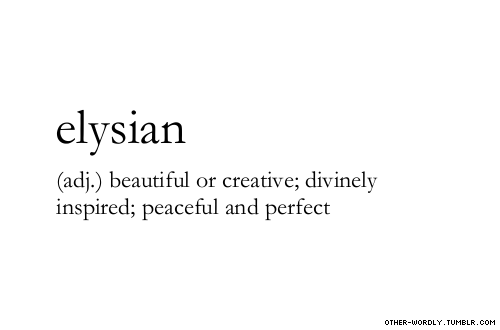
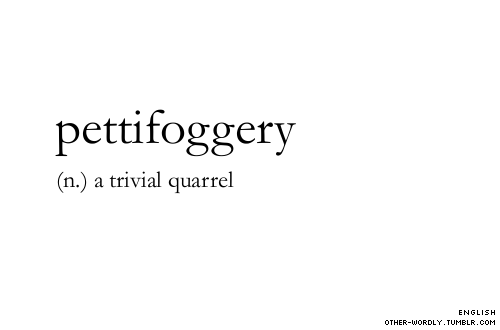
That's why I want to tell you about this blog: Otherwordly. It showcases all kinds of weird and wonderful words, from all different languages, (including Old Saxon English). Words that define vague states in black and white. Words that tether whimsical abstractions into the real world. Words that delight in nature's spectacles. Words that will make you stop and marvel at the power of language.

Anyway, here are some of my favourites, words that I feel are a necessity, not just a luxury, words that should exist in every language, in some form. I hope you enjoy them as much as I do:


Now, don't you feel as if you've seen the world anew? If words translate the world to us, then surely new words must shine a new light on our interpretation of it? We are forever discovering and re-discovering the world, why not language too? These words show just a glimpse of what language is capable of and its inherent alchemy.

If you like these selections, do check out the Otherwordly blog. It's also available on Facebook & Twitter. The words are also on the Writers Write Facebook page. (View them here)


~ Siobhán


Tuesday, 11 February 2014

Eat the Paté Then Meet the Duck?: On Meeting Writers


Question: Have you ever met your favourite author? In real life, face-to-face, palm-to-palm? Have you ever met with any authors? I'd love to hear how you found it. Because frankly, I find it a bit weird.

I've never hankered after meet'n'greets with authors. Not like, say in the way I'd want to meet a favourite musician or celebrity. Writers just aren't the same. Musicians are used with meeting and greeting their fans, as for any kind of celebrity, it comes with the job description. But with writers... I don't know. Although they're not all reclusive, they're not the chattiest bunch of people either. Meeting with them can sometimes be...awkward. 


I've met a few writers, one or two at book signings and talks, and others as part of workshops. Not huge famous names, but masters of their trade nonetheless. The most famous of them I suppose would be Irish/American fiction writer Colum McCann (above). He was doing 'an interview' with a journalist in my local setting. 
 There was about 20 people at it, and come the end, we had the opportunity to meet Colum and have our books signed. Despite being an extremely interesting talker, well-articulated and intellectual, serious but capable of cracking a joke or two as well, the talkative and genteel interviewee seemed a bit tongue-tied when up close and personal with his fans, amicable yes, but a little... awkward. I wouldn't imagine it to be any other way I suppose - a writer's work is an intensely solitary occupation after all. And me,  I have to admit I was a little star-struck, not in the sense of meeting a celebrity but meeting the mere man who put all those great words together, who created another world so grandly and easily. All you really want to ask is : 'How the heck did you do it?!' I was a bit surprised to have him turn all my questions back on me again then - 'Who are your influences? How would you describe your style?' when he surmised that I was a wannabe writer. Well, it was nice to be taken seriously by a serious writer. But unexpected, to say the least!

A while back I met Rita Ann Higgins, a poet from Galway, at a small poetry reading and had my book signed by her. But with no chit-chat. She signed the book and smiled and that was that, and again, seemed a little awkward, like a fish up a tree. Although, while she was reading, she was perfectly at ease. Strange isn't it?

I went to a poetry reading a few months ago of Carol Ann Duffy, the Poet Laureate of the UK, and one of my favourite  poets. I felt like I should have taken a book or two for her to sign, (seemed a sacrilege not to)  but then decided against it. I realised I didn't want to meet her, I just wanted to hear her read her work. That would suffice entirely. Anything else would be like going behind the curtain to see Oz, which only dismantles his (her) great and powerful aura of course.


As Margaret Atwood says, 'Wanting to meet an author because you like his/her work is like wanting to meet a duck because you like pâté.' She has a point! There's no correlation really. The writer is the person behind the product of their books, the medium; it's the book, the completed work we adore, not so much the behind-the-scenes writer. It's different with the other arts - musicians for example are more involved with the music - they are the faces of it, the personification. Joyce Carol Oates echoes this sentiment, stating that 'the individual is irrelevant to art.' It's the art, ultimately, that matters.

The workshops were better. The writers are nearer their natural element there. And when you're doing a workshop with them, you're attuned only to their writing skills - not personality, or ability to converse - gleaming wisdom from their every word. There is no need for awkwardness on their parts. And if you can get over the intimidation of revealing your work to them, you might be pleasantly surprised. But once again, when it came to the end and you approached them to sign a book for you, the bashfulness returned. One poet facilitator was all talk in the group, and quiet as a clam then in front of one person. And instead of flogging their books, they would go super shy and modest when it came to mention of them. Of course, every writer is different, but this has been my experience with the ones I've met.

I don't know about you, but I never know what to say to writers, except of course to gush my praises about their work, which only makes their demeanor more demure, suggesting that they aren't solely responsible for it. Of course, I know what they mean, know what they partly owe their success to: the writing genie. The force. The inspiration. That power we tap into on occasion. The alchemy that happens in pen and paper. The real star of the show.

Although it's great to say you've met your favourite writers in real-life, and can show-off your signed book whenever the occasion arises, I'd rather just meet them on the page, in their natural habitat, where they excel. Or read what they have to say about writing, instead of prod it out of them in person. On the page, there is a private dialogue between writer and reader that just can't be equaled in person.

How about you? Do you feel the same?  Any writer meetings ah, worth writing home about?


~ Siobhán


Tuesday, 22 October 2013

Read to Live & Let Live


I just have to share this amazing article by Neil Gaiman for The Guardian last week: 
It was an instant hit online and has been doing the rounds since. If you haven't read it already, I urge you, do! 


It was taken from Neil Gaiman's lecture for the Reading Agency last week explaining why using our imaginations, and providing for others to use theirs, is an obligation for all citizens. For anyone who doesn't know, Neil Gaiman is a popular fantasy/sci-fi/genre-bending writer of notable works such as The Graveyard Book and noted for providing much commentary to the discourse on the importance of literature in our lives. In this article, he surpasses himself though. He states his aim as the beginning: 

'I'm going to suggest that reading fiction, that reading for pleasure, is one of the most important things one can do. I'm going to make an impassioned plea for people to understand what libraries and librarians are, and to preserve both of these things.' 

And goes on to elaborate  the importance of literacy, literature and imagination in our lives, arguing the very relevant importance of language: 

'...words are more important than they ever were: we navigate the world with words, and as the world slips onto the web, we need to follow, to communicate and to comprehend what we are reading. People who cannot understand each other cannot exchange ideas, cannot communicate, and translation programs only go so far.'

He makes the point that fiction builds empathy (a recent article on this in The New York Times has also been an Internet viral success: For Better Social Skills, Scientists Recommend a Little Chekhov ) and adds that:

'You're also finding out something as you read vitally important for making your way in the world. And it's this:The world doesn't have to be like this. Things can be different.
Fiction can show you a different world. It can take you somewhere you've never been. Once you've visited other worlds, like those who ate fairy fruit, you can never be entirely content with the world that you grew up in. Discontent is a good thing: discontented people can modify and improve their worlds, leave them better, leave them different.'
  
The piece is a singing homage to the imagination and flourishers of the imagination - language, literature, reading, writing. He ends with a rousing declaration stating an obligation to daydream:

'We all – adults and children, writers and readers – have an obligation to daydream. We have an obligation to imagine. It is easy to pretend that nobody can change anything, that we are in a world in which society is huge and the individual is less than nothing: an atom in a wall, a grain of rice in a rice field. But the truth is, individuals change their world over and over, individuals make the future, and they do it by imagining that things can be different.'

An obligation to daydream? Imagine that! How many times have we been told to get our heads out of the clouds, stop staring into space, stop fantasising? Now, here is a writer and an accomplished man of letters making a public plea NOT to listen to this. To daydream on defiantly. Blessed are the daydreamers; they maketh the world. To imagine to infinity (and beyond). And by doing so, to make the world a better place. 

Read it! 


~ Siobhán 


'Imagination is more important than knowledge; knowledge will get you from A-Z, imagination encircles the worl.' ~ Albert Einstein

Sunday, 25 August 2013

Tuesday, 20 August 2013

Once in a Blue Moon: Personal Poems Inspired by Prose


Seeing since it is a Blue Moon tonight and in keeping with the spirit of blue moons meaning that something unusual and seldom should happen (the adage 'once in a blue moon') - I've decided to post some of my own poems here all in the name of random and seldom and blue moon buffoonery.

I can't believe I've been on such a long summer hiatus! Lots of reasons for this, not least of all a sudden onset of extreme indecision - so many posts, so little time! Most of the time my head is bursting with different things to write on and then when I go to write them down, they suddenly don't look so hot-shot and so I decide not to. A case of stage-fright methinks. 

So what better way to resolve it than this personal showcasing?!
(Again, I am not fishing for feedback, although it would be quite lovely, or by-the-by, a nitpicking scalpel-wielding criticism - these poems were written solely on and for the inspiration behind them - they are not for publishing or getting beyond their station as mere personal homages. Just for enjoyment sake really.) Also, I think the posting of personal writing is a kind of requirement for personal blogs isn't it? But not so much that it turns into your own narcissistic personal writing page. No no, that wouldn't do at all.

They are poems I like to file under the 'Under the Influence' part of my oeuvre - and no dear readers, before you think it not poems written while intoxicated by alcohol or any other opiate substance - but by other texts, Gatsby for example. 

The book has been such a huge influence on me, its poetic telling of having a dream and watching it die and all the tragedy therein, has left an indelible imprint on my psyche. Not to forget the symbolism. Who can forget Fitzgerald's use of the green light in the book that will forever haunt readers after the last few lines? So what I've done here is put to use some of the famous (and my favourite) quotes from the book - can you spot them? - while taking from the story a very personal parable I can relate to. 

The other is a personal reinterpretation of Flaubert's tragic heroine Emma Bovary from 'Madame Bovary,' a young married woman who becomes so obsessed with romantic literature and so deprived of romance in her lonely provincial life that after countless disastrous affairs and longings, her only escape from an unromantic existence is offered to her in death, her choice of poison -  arsenic. It's one of those stories that you don't forget easily.

And lastly, a salutation to classic film 'The Wizard of Oz' - because there's just so many metaphors to be found in that!

How about you? Any poems/prose you've written inspired solely by certain stories, films or plays? Do share. Even if it's not usually something you would do - it's a blue moon after all remember!

~ Siobhán


Not So Great After All

You were the Daisy to my Gatsby:
the dream to a dreamer 
horizon to a hapless heart,
realist to an idealist. 
You put the stars in my eyes 
but they weren’t your currency;
love not enough to please
your gilded gold soul.


But there were summer parties:
blue lawns and green docks,
champagne, whispering and stars,
moments like moths flitting by

and the pearl of a dream shiny
from years of tending, thinking,
wishing  that life really did
begin again in summer;

a brief suspension of snatched silver 
kisses and time like a tuning fork
on a star; reality suspended so
past almost become present.  Almost.  
You preferred  a safe exit
from an owed nostalgia; love’s loyalty
too much trouble, too much thinking, 
too much silver wishing. 

And so the count of enchanted objects 
diminished: a rose went back
to a rose and in the dawn
the green light grew to a spectre.
The dream became an illusion
then a web, a collision crash of fate
and your betrayal -a pistol
at point blank range.

So much for the green glow
of hope, the orgastic future.
Our boats weren’t made
to beat the current. 

***


Madame Bovary

Poisoned by pining and looking for love
in a limbo of loneliness,
artificial arranged feelings
and misplaced misdemeanours
shattering a sentimental self.

I don’t want to be a heroine
if it means being heartbroken.
So I drink the arsenic of fantasy
to burn the feeling part
of my heart away.


***


What the Wizard of Oz Really Means

Dorothy, 

with a ruby-red heart,
in search of her over-the-rainbow
out-of-reach destination.

A house of fate fallen
on her fear, a tornado tearing through
her timid thoughts.

Following the yellow-brick road
of idealism, stuck at the crossroads
between home and horizon.

On a quest for a bright brain,
a well-oiled heart,
the bold bravery of a lion.

Saved by the good fairy of fortune,
the surprise sparking of inspiration,
melting the wicked witch of guilt.

Off to see the wizard, only
to pull the curtain on the great illusion
and learn the wisdom of intuition.

And a mere click of heels away
from turning black and white reality
into Technicolor wonder.

***

 © Siobhán Mc Laughlin