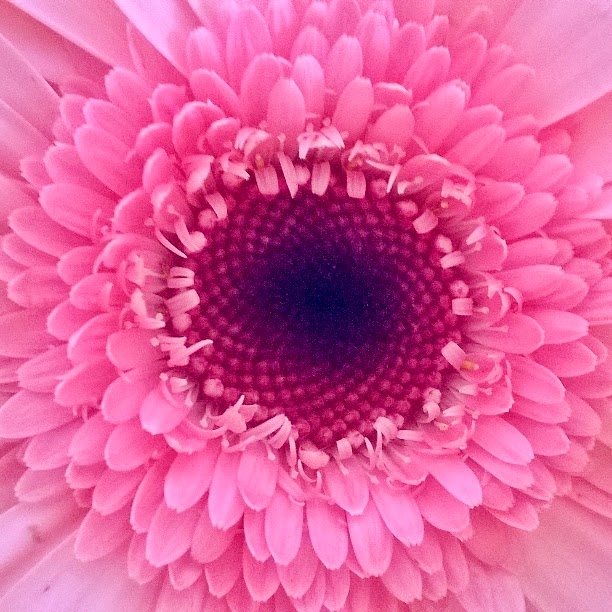
' I want to be improbable beautiful and afraid of nothing,
as though I had wings...'
In this season of waiting and winter, there are many beautiful things...
Starlings in Winter - Mary Oliver
Chunky and noisy,
but with stars in their black feathers,
they spring from the telephone wire
and instantly
they are acrobats
in the freezing wind.
And now, in the theater of air,
they swing over buildings,
dipping and rising;
they float like one stippled star
that opens,
becomes for a moment fragmented,
then closes again;
and you watch
and you try
but you simply can't imagine
how they do it
with no articulated instruction, no pause,
only the silent confirmation
that they are this notable thing, this wheel of many parts, that can rise and spin
over and over again,
full of gorgeous life.
Ah, world, what lessons you prepare for us,
even in the leafless winter,
even in the ashy city.
I am thinking now
of grief, and of getting past it;
I feel my boots
trying to leave the ground,
I feel my heart
pumping hard. I want
to think again of dangerous and noble things.
I want to be light and frolicsome.
I want to be improbable beautiful and afraid of nothing,
as though I had wings.
'The color of springtime is in the flowers; the color of winter is in the imagination.'
~ Terri Guillemets
'How many lessons of faith and beauty we should lose, if there were no winter in our year!' ~Thomas Wentworth Higginson
'Winter is, once again, the white page on which we write our hearts.' ~ Adam Gopnik
How are you enjoying November so far? It's such a maligned month isn't it? The month which opens the jaws of winter: sharp cold dark days and long nights. I'd imagine it's not many people's favourite month. Even its very sound 'No-vem-ber' is like a booming negative enforcer of some malevolent kind.
In researching my selections of poems for my poem-a-day blog this month I have to say I've found a lot of negative responses to the month. Maybe none more so than 'November' by Thomas Hood which plays on the 'No' of November to a staggering degree. Here is a taster:
November - Thomas Hood
No sun - no moon! No morn - no noon! No dawn - no dusk - no proper time of day - No sky - no earthly view - No distance looking blue ... No warmth, no cheerfulness, no healthful ease, No comfortable feel in any member - No shade, no shine, no butterflies, no bees, No fruits, no flowers, no leaves, no birds - November!
And another along the same lines, from John Clare:
"So dull and dark are the November days.
The lazy mist high up the evening curled,
And now the morn quite hides in smoke and haze;
The place we occupy seems all the world." - November
November can be a dread for a lot of people. I used to be one of them. Hated to see winter coming, being a Spring girl at heart! I just couldn't accept this opposite season. But I have learned to like its precursor autumn, to appreciate it as a season not of endings, but of new beginnings in recent years. And with winter, I am beginning to see it not as barren and bleak, but peaceful, wise, maybe even magical, with wonder hidden beneath the plain exterior. As John Updike says in his poem 'A Child's Calendar' under November: 'and yet the world/in its distress/displays a certain/loveliness. It does.
First, it is essential to acknowledge that November's (and winter's) accompanying sorrow or sadness or melancholy is not necessarily a bad thing. It is natural to change with the seasons and sync to them. Spring invites new enthusiasm and hope; summer luxuriating, basking in being; autumn reaping and reflection; and winter, contemplation, learning and wisdom. In the poem My November Guest by Robert Frost, he acknowledges that sorrow follows him in this month, but he has learned to accept her presence, and see the beauty she relinquishes: 'she loves the bare, the withered tree... she's glad her simple worsted gray is silver now with clinging mist.'Sorrow, really a kind of hyper-sensitivity, teaches us how to look more deeply at the world and revel in any mere hints of beauty we see there. Sorrow revels in winter, not just as a fitting mournful landscape, but as one that offers sure signs of resilient beauty. The poet in this poem looks on his sorrow as a way of learning to be in the season, not berate it. So much so that he is able to find beauty and even balm in November too. *(You can read the poem by clicking on its title).
One good point going for November is its position in the calender year as a prelude to December, namely, to Christmas. I distinctly
remember one November a few years ago, sitting by a cafe window,
looking at lovely snow photos in a magazine, the evening lit blue by
early Christmas lights outside. It was nowhere near Christmas, but there
was a feeling of something in the air, a frosty undercurrent of enchanting expectation
that conjured up snow and all its sparkly connotations, an eager belief in all kinds of happenings, shimmering on the horizon like the Northern Lights. It was quite magical. And now, November is imprinted for me with this bright blue memory.
When you think about it, November is where our Christmas dreams and wishes take root; where thoughts of the festivities to come slip into our consciousness and germinate seasonal magic. For it does not come from nowhere, but only by expectation, preparation, and much awaiting. And November days sparkle with this electric expectation (always more heady itself than the actual happening.) Just as the trees have begun to twinkle with lights, early strung with high hopes, so do our winter selves begin to look forward instead of back. The light ahead is warm and beckoning, the darkness merely a backdrop for it. And instead of dreading the winter to come, we adapt to it and begin to appreciate it. The days have changed, things begin to look different, no longer in a bad summer-is-gone way, but in a new enlightened winter wonderful way. Now suddenly there are things to like about the dark days, things that lighten them.
December's magic is dependent on the festivities; it is an expected and assumed magic, and when you're expected and assumed to feel things, often, they fall flat. But November's magic is not dependent on such things, more so on the changes in season, as the first inklings of winter are not all bad. There are dull days yes, but accompanying them gorgeous sundowns and dusks. Look up at dusk and see the sky change an exquisite palette of colours like never before, the frosty temperatures cutting the pigments brighter. The other day I was
awestruck by the most gorgeous display of colours at our local seaside, a
palette of cool arctic blues: cerulean, navy and turquoise skies, lit by
golden sun hues as the evening dipped and fanned, and the water shining silver in
response. Another day it was contrasted with primary colours of warm red and amber and yellow in the sunset. And another, I was stunned by a hazy watercolour landscape of dusky peachy pinks offset by cool soft blues. Beautiful. And proof that November, and winter, is not as bleak as it looks. Beneath the surface, it shimmers, it glows. Here are some of the shots I took:
'The sunbeams are welcome now. They seem like pure electricity—like friendly and recuperating lightning.' ~ John Burroughs
'Of winter's lifeless world each tree Now seems a perfect part; Yet each one holds summer's secret Deep down within its heart.' ~ Charles G. Slater
'The thinnest yellow light of
November is more warming and exhilarating than any wine they tell of.' ~ Thoreau
'Than these November skies Is no sky lovelier. The clouds are deep; Into their grey the subtle spies Of colour creep, Changing that high austerity to delight' ~ John Freeman*(poem below)
These sunset skies are truly something wonderful to behold. Just when you think the light has drained from the days, it comes back in a spectacular show. But it's not just sunsets. Night skies also come alive this season. Stars can be seen more clearly on frosty nights, like diamonds sparkling on a midnight blue backdrop. November's moon, the frosty moon, is one of the most
beautiful of the year, brighter and whiter than in other months, a
veritable spotlight hanging in the sky. This year's was particularly
brilliant: the nights were back-lit for a week or more, a grand stadium
of the wee hours. And of course, there's the fantastic multi-coloured Northern Lights, putting in an appearance this time of year, fixing all eyes skyward. Seems the darker it is, the more colours come out. Or maybe winter is the time our senses are pricked into appreciation and so we see more clearly, more acutely the things we have taken for granted all year, specifically: light, sun and colour.
'Stars fall and shoot in keen November' ~ Christina Rosetti
'In
winter the stars seem to have rekindled their fires, the moon achieves a
fuller triumph, and the heavens wear a look of a more exalted
simplicity.' ~ John Burroughs
November
weather however miserable, always harbours the possibility of snow. And
that is something to wish upon, a gorgeous snow-show to magic up the
days. The icing on the cake of
winter, so to speak, for what could be more beautiful than snow? More
transforming? More magical? (All in a limited picturesque not
potentially dangerous quantity I might add!) We wish for snow as we wish
for something to interrupt our daily quotidian lives and startle us
into revelations of beauty, of magic, of wonder. Snow stops routine,
invites hunkering down, playfulness, a suspension of the ordinary, an
awed reaction to the elements. There's nothing like snow to stop us in our tracks, both literally and figuratively.It white-washes our familiar surrounds new again. It is winter's blank slate in literal terms. It is the 'sublime' winter the Romantics spoke of and wrote about, a catalyst of interior contemplation - remember Coleridge's 'Frost at Midnight', the winter night creating a 'solitude, which suits
Abstruser musings'? EE Cummings in his
poem 'Enter No Silence' expresses his wish for snow, for 'very
whiteness: absolute peace, never imaginable mystery.' Exactly. Well if there is
no snow, we at least have November 'white' weather with
misty
moments, starry frosts and icy tendrils. November weather is atmospheric
weather. Who doesn't love walking along exhaling frosty breaths? Or
wrapping up snug to face the elements? Winter weather may be
challenging, but it is also enchanting. Beneath its heavy machinations, there is a haven of beauty.
'It
is the life of the crystal, the architect of the flake, the fire of the
frost, the soul of the sunbeam. This crisp winter air is full of it.'
~ John Burroughs
'And when comes the winter snow monotonous,
I shut all the doors and shutters
To build in the night my fairy palace.'
~ Charles Baudelaire
Winter is the season when the home becomes the hearth. It is a time of retreat into the interior places (and spaces), the 'fairy palaces' of our lives. I personally like to use this season for reading, writing, (and dreaming). A time to cosy by the fire yes, but also to contemplate, to burrow deep, to reflect on the year past and formulate hopes for the year to come. There's a great Rumi quote about winter that goes: "And don't think the garden loses its ecstasy in winter. It's quiet, but the roots down there are riotous." I love this idea. Now's the time when our cores are nourished and our 'roots' are riotous planning growth, developing their sloping strands, eager to grow into the year ahead. On the surface, winter is till, but look deep and there is frantic movement. In the hush of snow and silence of the dark, things breathe into being. Ted Kooser and Mary Oliver have poems that echo this sentiment using trees as subject matter (*see below). But it is a line from an Alice Oswald poem 'Owl Town,' that has completely enchanted me and changed my view of the season entirely: 'a wood of wishbone trees'. But of course! Look at how winter trees are exposed to the sky, their branches stretched and straining upwards, curved in delight, in valiant u's of hope. What a magical transformative way of looking at what seems bare and barren. And the season. See, everything about it seems to point to: wishing.
'Bare branches in winter are a form of writing.' ~ Billy Collins, 'Winter Syntax'
'Every object pleases.... the straight light-gray trunks of the trees...
how curious they look, and as if surprised in undress.' ~ John Burroughs
Adam Gopnik echoes this view in his book on the season 'Winter' (my staple read of the season.) It is a collection of essays 'five windows into the season' in which Gopnik puts forward different concepts of winter: romantic winter, radical winter, recreational winter, recuperative winter, remembering winter. In romantic winter, he argues that winter has been romanticised by artists and writers and dreamers alike, for this reason it is he says the season of the imagination: 'Winter is the climate of the imagination. Winter displaces us from the normal cycles of nature - nothing's growing - and with our dysfunction from nature comes our escape into the mind, which can make of nature what it will.' He sees the season as a 'positive, and even purifying, presence of something else - the beautiful and the peaceful, yes, but also the mysterious, the strange, the sublime.' The season he states, has been defined by 'absences (of warmth, leaf blossom) but can be imagined as stranger presences (of secrets, roots, hearths). It is truly a season of what we make it, think it, dream it. It is a time of epiphanies, of hopes, of dreams, of making
blueprints for the year to come. For as Gopnik says, 'Winter is, once again, the white page on which we write our hearts.' It is. A beautiful blank slate. Not the blankness of an end, but the brightness that precedes a new beginning. The 'oblivion', according to Mary Oliver that 'is full of second chances'.
I've been enjoying November so far. In fact, it seems to be speeding by and I find myself willing it to stay. The days aren't just longer, but seem deeper too, thinking terrain. There are treasures to be found in them. I can only hope that the rest of winter will be the same.
Andrew Wyeth says of his seasonal preference: 'I
prefer winter and Fall, when you feel the bone structure of the
landscape — the loneliness of it, the dead feeling of winter. Something
waits beneath it, the whole story doesn’t show.' Something waits beneath it. I think it's this 'something' that provides the magic of the season. Nature's lessons of growth. The light's refusal to go away. The beauty that is present in apparent bleakness. The warmth the cold can generate. The infallible hope. All of these potent patents of the season have almost won me over I must admit. Winter may be a season that is hard to love, but it does offer wonder. I am still looking forward to spring, but now I'm letting the cold of winter sharpen my senses to the world around me, bring my attention to the seasonal show now playing, the perks to be found in its performance. Spring may be a giddiness of growth, a proof of hope, a green fire fueling enthusiasm, but Winter is a wise and wistful teacher, it has lessons of grace and patience to offer, and I am listening, finally. Spring begets new growth, but winter paves the way. Spring is all shoots and buds, but winter's work lies deep in the roots; it is a season of interior growth.
Below are some poems I've mentioned above. And after those, a beautiful song which I think sums up the feeling of winter wonder exactly: tentative, fragile, subtle, sparkling, whimsical, wonder-ful, magical, warm.
For now,
wading in wonder,
~ Siobhán
November Skies - John Freeman
Than these November skies Is no sky lovelier. The clouds are deep; Into their grey the subtle spies Of colour creep, Changing that high austerity to delight, Till ev'n the leaden interfolds are bright. And, where the cloud breaks, faint far azure peers Ere a thin flushing cloud again Shuts up that loveliness, or shares. The huge great clouds move slowly, gently, as Reluctant the quick sun should shine in vain, Holding in bright caprice their rain. And when of colours none, Not rose, nor amber, nor the scarce late green, Is truly seen, -- In all the myriad grey, In silver height and dusky deep, remain The loveliest, Faint purple flushes of the unvanquished sun.
***
Walking Beside a Creek - Ted Kooser
Walking beside a creek
in December, the black ice
windy with leaves,
you can feel the great joy
of the trees, their coats
thrown open like drunken men,
the lifeblood thudding
in their tight, wet boots.
Did
you know that yesterday was Global Tiger Day? A day designated as of a
few years ago to raise awareness for tiger conservation. Sadly, their
numbers are dwindling and they are close to the verge of extinction.
Tigers
are magnificent animals aren't they? The most admired of all the
big cats, they hold a mesmeric fascination for many people, myself included.
There's something so mysterious about them, beautiful, intense, and
fearsome. They are animals of myth, of metaphor, of meaning, animals of life and death, of great beauty and simultaneously, great terror.
And where can we experience these animals in more detail? Why, literature of course. Nature documentaries tell us the facts about tigers; literature, the myths. Tigers often feature in fiction,
majestic in their metaphorical appeal. From Shere Khan in Kipling's classic 'The Jungle Book',
to modern day Richard Parker, the shipwrecked tiger in 'Life of Pi',
tigers are an intriguing addition to narratives. What I want to do here is mention a few
books and poems that I found particularly memorable.
Tigers in Red Weather - Ruth Padel "Whatever artist dreamed up the tiger face exaggerated the eyes. White butterfly patches wing up like higher,
bigger eyes above surprisingly small real ones of ochre. Black
hierogliphics in these patches vary from tiger to tiger. Over his right
eye is a blurry black triangle with three crescent moons above. Over the
left a worm of black flame." First
off, it's poet's Ruth Padel's brilliant part travelogue, part poetic
reflection on notes from her journey/quest to Asia to understand more
about tigers. The book chronicles the history of tigers in their
diverse habitats, ranging from their symbolic importance to cultural
influence. This unique book offers a detailed analysis of the tiger, in its rapidly changing habitat, in culture, in literature and what is most arresting,
in the author's own personal life. The chapters are interwoven with a personal
narrative arc in which Padel explores her own fascination with
tigers and the wild in the light of a bitter break-up. The book strives
to answer - explore rather - the question of why tigers fascinate us,
and what this fascination means. It is a book like no other;
genre-defying and filled with passion and poetry. To read it is to
delve into the world of tigers: to wade knee-deep in Asian forests, in
staggering conservation facts and figures, in fantastic myths and legends (did you
know that some Eastern religions revere the tiger as a god?), into the
fecund poetry of the wild, and in the process, of the heart.
The Tiger's Wife - Tea Obreht
“In my earliest memory, my grandfather is bald as a stone and he takes me to see the tigers.”
This
book by debut young author Tea Obreht uses the symbol of a tiger in a most
compelling manner. The novel is set in a Balkan country of modern day,
and the story is one about death, in a world marked by old legends and
war wounds, love and loss. The tiger appears in the story as a sign of
power, of strength, befriending the abused wife of a brutal butcher, the
seeming key part in the complex riddle of the plot. It's up to us to
interpret it, but what the tiger means is never obvious, it is always
changing, like a mirage or a myth from the moment it appears in the
novel - escaping from a bombed zoo to lurk in the background of the
story, only to appear in crucial moments and hasten the climax of this confusing, yet
affecting story.
Life of Pi - Yann Martel"Richard
Parker rose unsteadily to his feet on the tarpaulin, eyes blazing as
they met mine, ears laid tight to this head, all weapons drawn. His head
was the size and colour of the lifebuoy, with teeth."Perhaps
the most famous and favourite animal in fiction is Richard Parker, the
400lb Bengal tiger that ends up in a lifeboat with sole survivor Pi in
this magical realist tale from Yann Martel. The book's original spark
revolves on the presence of this character and unlike other fictions
that feature tigers, this tiger is a mainstay in the story, not fleeting
or lurking, but in the main stage of the lifeboat for two thirds of the
novel, up front and scarily personal! Richard Parker is not just a plot
device but a fierce frightening character that keeps the pages turning
and the suspense wire-tight. If you want to experience a tiger in
close-up quarters, read this. And if you want to read a swashbuckling
adventure tale with a spiritual centre, read this. And if you want to
read a really good book, read this!
In
poetry, I suppose William Blake's 'The Tyger' (above) is the most
well-known poem about tigers, the image of the animal with its 'fearful
symmetry' 'burning bright' in the poem a suggestion of the fearful
presence and allure of evil. But, I want to turn your attention to some
other poems. (You can read the typescript of 'The Tyger' on my Poem a Day blog today.)The
first one by Ruth Padel, 'Tiger Drinking at Forest Pool' is the end
result of her tiger quest, and is found as a preface to 'Tigers in
Red Weather'. It is both dramatic and beautiful, just like the animal
itself, offering flitting glimpses of the tiger, and in these images,
everything it represents. The poem fittingly captures the essence of the
tiger as described in her book: mysterious, majestic, mythic.Tiger Drinking at Forest Pool - Ruth PadelWater,moonlight,
danger,
dream.
Bronze urn angled on a tree root: one Slash of light, then gone. A red moon Seen through clouds, or almost seen. Treasure found but lost, flitting betweenThe worlds of lost and found. An unjust lawRepealed, a wish come true, a lifelongSadness healed. Haven, in the mindTo anyone hurt by littleness. A prayerFor the moment, saved; treachery forgiven.Flame of the crackle-glaze tangle, amberReflected in grey milk-jade. An old songRemembered, long debt paid. A painting on silk, which may fade. The
second is a metaphysical classic from South American poet Borges, where
the tiger begins as a symbol, but then is interrupted by the
realisation of its real self, the 'deadly jewel' that stalks the forests
in Bengal and Sumatra, as being superior to the one of thought. The
poem presents a conflict between the imagiantion and reality, the mind's
pursuits as opposed to the physical world, essentially the tension
involved in writing - can we writers ever note down life as it truly is?
It ends cryptically with the poet talking of the need to find a 'third'
tiger, one that is neither symbolic or real, an elusive creature no
doubt.The Other Tiger - Jorge Luis BorgesA tiger comes to mind.
The twilight hereExalts the vast and busy Library
And seems to set the bookshelves back in gloom;
Innocent, ruthless, bloodstained, sleek
It wanders through its forest and its day
Printing a track along the muddy banks
Of sluggish streams whose names it does not know
(In its world there are no names or past
Or time to come, only the vivid now)
And makes its way across wild distances
Sniffing the braided labyrinth of smells
And in the wind picking the smell of dawn
And tantalizing scent of grazing deer;
Among the bamboo's slanting stripes I glimpse
The tiger's stripes and sense the bony frame
Under the splendid, quivering cover of skin.
Curving oceans and the planet's wastes keep us
Apart in vain; from here in a house far off
In South America I dream of you,
Track you, O tiger of the Ganges' banks. It strikes me now as evening fills my soul
That the tiger addressed in my poem
Is a shadowy beast, a tiger of symbols
And scraps picked up at random out of books,
A string of labored tropes that have no life,
And not the fated tiger, the deadly jewel
That under sun or stars or changing moon
Goes on in Bengal or Sumatra fulfilling
Its rounds of love and indolence and death.
To the tiger of symbols I hold opposed
The one that's real, the one whose blood runs hot
As it cuts down a herd of buffaloes,
And that today, this August third, nineteen
Fifty-nine, throws its shadow on the grass;
But by the act of giving it a name,
By trying to fix the limits of its world,
It becomes a fiction not a living beast,
Not a tiger out roaming the wilds of earth.
We'll hunt for a third tiger now, but like
The others this one too will be a form
Of what I dream, a structure of words, and not
The flesh and one tiger that beyond all myths
Paces the earth. I know these things quite well,
Yet nonetheless some force keeps driving me
In this vague, unreasonable, and ancient quest,
And I go on pursuing through the hours
Another tiger, the beast not found in verse. My last choice comes from Wallace Stevens, 'Disillusionment of Ten O' Clock.' In it is the phrase that became the title of Padel's book - 'tigers in red weather.'
The association, from a mere mention, is of tigers with the wilder side
of life. In the poem they seem to be motifs of the go-getting ambition and passion
that lies within us all - that flip side of life that we all hunger
after.Disillusionment of Ten O' Clock - Wallace StevensThe houses are haunted
By white night-gowns. None are green, Or purple with green rings, Or green with yellow rings, Or yellow with blue rings. None of them are strange, With socks of lace And beaded ceintures. People are not going To dream of baboons and periwinkles. Only, here and there, an old sailor, Drunk and asleep in his boots, Catches Tigers
In red weather.
It's
clear that the tiger is an animal that appeals to all and yet can mean
so many different things. What do tigers represent to you? To me it's a
fierce kind of freedom, a fearlessness, a wild ultimatum to live, a
vibrancy of being alive, a certainty of spirit, a ferocious resolve. In
Life of Pi at one point, with the seas and skies swirling around
him, everything in monocolour, Pi notes how his eye and resolve is
drawn to the colour of Richard Parker - the same colour as the lifeboat,
a vibrant colour of life, of survival, of wanting and fighting to live.
There's also that 'fearful symmetry' to
tigers that Blake talked of. Padel describes in her book a moment of
looking at a tiger's face up close - how excruciatingly terrifying it
is, like looking at a 'death mask.' Tigers are intriguingly both
beautiful and terrible, a thing of vibrant life and violent death, powerful, yet now, in our modern world, vulnerable. But their power is such that they can mean many things - metaphors, motifs, symbols, allegories. Do you have the 'eye of the tiger'? Can you unleash the 'tiger inside'?
Modern life is filled with such references. As is literature. But sadly,
the forests of the world are emptying with tigers. The 'painting on silk' which Padel's describes, is beginning to fade. You can read more on tigers plight here: WWF Tiger Day.~Siobhán
Well it's May already, official flowering month! May of course comes from the word 'Maia', the name of an ancient Roman goddess of flowers and growth.
Because I love flowers so, and like Monet, must have them, 'always and always! my Poem a Day blog this month will host many poems on flowers in keeping with the general theme of May. And here I thought I'll follow suit seeing as it is May Day and present you with a bouquet of words to describe the beauty of flowers from famous fans, among them artists, writers, poets and general commentators.
I often think of Iris Murdoch's quote about how people from another planet would wonder at flowers and why we are not 'mad with joy' at the sight of them all the time. Everytime I think of it, it just ups my flower euphoria another few gradients. Isn't it so spectacularly true???! Imagine spending time in a bleak desert terrain and then being transposed to a park in spring?! Not an oasis, but paradise itself! And of course Buddha's remark resonates with this - if only we could see a single flower most clearly, the whole world would change and we would reel in its wonder. Maybe if we could just sit and contemplate a flower for a moment, we could start.
Just being in the presence of flowers makes me happy. They lift the spirits like nothing else. They can brighten a room, but also a heart. They are so simple, yet so sublime at the same time. Not mere footnotes to our daily routines, but fanfares of delight, is we just be aware. There for the delighting. I love looking at them and I love to buy them. Not on special occasions, but on ordinary unmarked ones, indeed, to make them special. I think that there's no more tender or beautiful gesture in this materialistic world of ours than to give flowers to someone, not just on a romantic note (which has become sadly clichéd and tarnished), but any kind of note: a thank you, a get well, happy birthday, but most especially just a 'hi, how are you, have a nice day' thinking-of-you, heres-a-little-bit-of-beauty bouquet. If only it were a practice more ingrained in our society! Think how much happiness it would spread.
If you're not a fan of flowers then maybe these words will persuade you otherwise and open your heart, like petals unfolding, to the beauty of them. And if you are a fan, you'll enjoy these immensely I'm sure.
Here's to a flowering May!
~ Siobhán
'I perhaps owe having become a painter to flowers'.
'I must have flowers, always, and always.' ~ Claude Monet
'If we could see the miracle of a single flower clearly, our whole world would change.' ~ Buddha
'If
you've never been thrilled to the very edges of your soul by a flower
in spring bloom, maybe your soul has never been in bloom.' ~Terri
Guillemets
'Flowers... are a proud assertion that a ray of beauty outvalues all the utilities of the world.' ~Ralph Waldo Emerson
'The Earth laughs in flowers.' ~ Ralph Waldo Emerson
'The
artist is the confidant of nature, flowers carry on dialogues with him
through the graceful bending of their stems and the harmoniously tinted
nuances of their blossoms. Every flower has a cordial word which nature
directs towards him.' ~Auguste Rodin
'When you have only two pennies left in the world, buy a loaf of bread with one, and a lily with the other.' ~ Chinese Proverb
'The temple bell stops but I still hear the sound coming out of the flowers.'
~Basho
'People
from a planet without flowers would think we must be mad with joy the
whole time to have such things about us.' ~Iris Murdoch
'since the thing perhaps is to eat flowers and not to be afraid' ~ E.E. Cummings
'I would rather have roses on my table than diamonds on my neck.' ~ Anais Nin
'It is by believing in roses that one brings them to bloom.' ~ French Proverb
What
this old world needs is more bouquets handed around to folks when they
are alive and kicking. Flowers don't do a dead one much good.
'What this old world needs is more bouquets handed around to folks when they are alive and kicking. Flowers don't do a dead one much good.' ~ Robert Elliott Gonzales
'There are always flowers for those who want to see them.' - Henri Matisse
'Where flowers bloom so does hope'. - Lady Bird Johnson
'Flowers are love's truest language.' ~Park Benjamin
'Flowers always make people better, happier, and more helpful; they are sunshine, food and medicine to the mind.' ~ Luther Burbank




 Life of Pi - Yann Martel "Richard
Parker rose unsteadily to his feet on the tarpaulin, eyes blazing as
they met mine, ears laid tight to this head, all weapons drawn. His head
was the size and colour of the lifebuoy, with teeth."Perhaps
the most famous and favourite animal in fiction is Richard Parker, the
400lb Bengal tiger that ends up in a lifeboat with sole survivor Pi in
this magical realist tale from Yann Martel. The book's original spark
revolves on the presence of this character and unlike other fictions
that feature tigers, this tiger is a mainstay in the story, not fleeting
or lurking, but in the main stage of the lifeboat for two thirds of the
novel, up front and scarily personal! Richard Parker is not just a plot
device but a fierce frightening character that keeps the pages turning
and the suspense wire-tight. If you want to experience a tiger in
close-up quarters, read this. And if you want to read a swashbuckling
adventure tale with a spiritual centre, read this. And if you want to
read a really good book, read this!
Life of Pi - Yann Martel "Richard
Parker rose unsteadily to his feet on the tarpaulin, eyes blazing as
they met mine, ears laid tight to this head, all weapons drawn. His head
was the size and colour of the lifebuoy, with teeth."Perhaps
the most famous and favourite animal in fiction is Richard Parker, the
400lb Bengal tiger that ends up in a lifeboat with sole survivor Pi in
this magical realist tale from Yann Martel. The book's original spark
revolves on the presence of this character and unlike other fictions
that feature tigers, this tiger is a mainstay in the story, not fleeting
or lurking, but in the main stage of the lifeboat for two thirds of the
novel, up front and scarily personal! Richard Parker is not just a plot
device but a fierce frightening character that keeps the pages turning
and the suspense wire-tight. If you want to experience a tiger in
close-up quarters, read this. And if you want to read a swashbuckling
adventure tale with a spiritual centre, read this. And if you want to
read a really good book, read this! 
 Tiger Drinking at Forest Pool - Ruth Padel Water,moonlight,
danger,
dream.
Bronze urn angled on a tree root: one Slash of light, then gone. A red moon Seen through clouds, or almost seen. Treasure found but lost, flitting betweenThe worlds of lost and found. An unjust lawRepealed, a wish come true, a lifelongSadness healed. Haven, in the mindTo anyone hurt by littleness. A prayerFor the moment, saved; treachery forgiven.Flame of the crackle-glaze tangle, amberReflected in grey milk-jade. An old songRemembered, long debt paid. A painting on silk, which may fade. The
second is a metaphysical classic from South American poet Borges, where
the tiger begins as a symbol, but then is interrupted by the
realisation of its real self, the 'deadly jewel' that stalks the forests
in Bengal and Sumatra, as being superior to the one of thought. The
poem presents a conflict between the imagiantion and reality, the mind's
pursuits as opposed to the physical world, essentially the tension
involved in writing - can we writers ever note down life as it truly is?
It ends cryptically with the poet talking of the need to find a 'third'
tiger, one that is neither symbolic or real, an elusive creature no
doubt.
Tiger Drinking at Forest Pool - Ruth Padel Water,moonlight,
danger,
dream.
Bronze urn angled on a tree root: one Slash of light, then gone. A red moon Seen through clouds, or almost seen. Treasure found but lost, flitting betweenThe worlds of lost and found. An unjust lawRepealed, a wish come true, a lifelongSadness healed. Haven, in the mindTo anyone hurt by littleness. A prayerFor the moment, saved; treachery forgiven.Flame of the crackle-glaze tangle, amberReflected in grey milk-jade. An old songRemembered, long debt paid. A painting on silk, which may fade. The
second is a metaphysical classic from South American poet Borges, where
the tiger begins as a symbol, but then is interrupted by the
realisation of its real self, the 'deadly jewel' that stalks the forests
in Bengal and Sumatra, as being superior to the one of thought. The
poem presents a conflict between the imagiantion and reality, the mind's
pursuits as opposed to the physical world, essentially the tension
involved in writing - can we writers ever note down life as it truly is?
It ends cryptically with the poet talking of the need to find a 'third'
tiger, one that is neither symbolic or real, an elusive creature no
doubt. The Other Tiger - Jorge Luis Borges A tiger comes to mind.
The twilight hereExalts the vast and busy Library
The Other Tiger - Jorge Luis Borges A tiger comes to mind.
The twilight hereExalts the vast and busy Library Disillusionment of Ten O' Clock - Wallace Stevens The houses are haunted